Corridor ventilation in high-rise housing
Completed
Many Canadian apartment towers are designed to supply outdoor air to suites by pressurizing common corridors. This completed collaboration measured how these systems perform in an occupied high-rise and tested whether operating and environmental data can identify conditions that increase the risk of under-ventilation or reversed airflow.
Project overview
What the field measurements showed
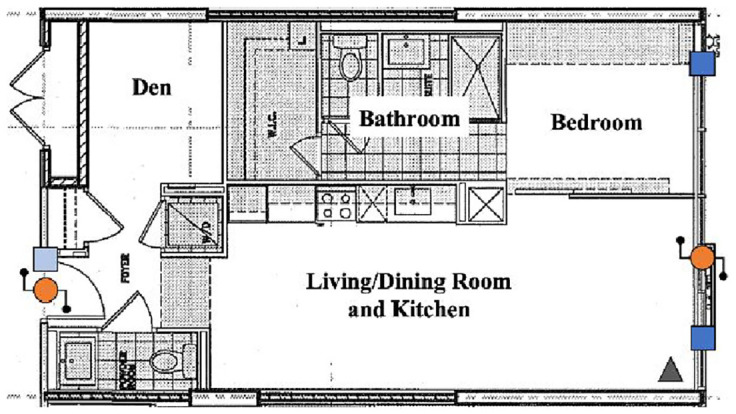
Six months of monitoring in a 17-storey Toronto tower showed that corridor-to-suite pressure was highly variable between units and over time. Exhaust-fan, window and door operation could create pressure changes larger than those produced by the corridor system itself, while weather effects and operating patterns differed by suite and location.
Modelling pressure differences
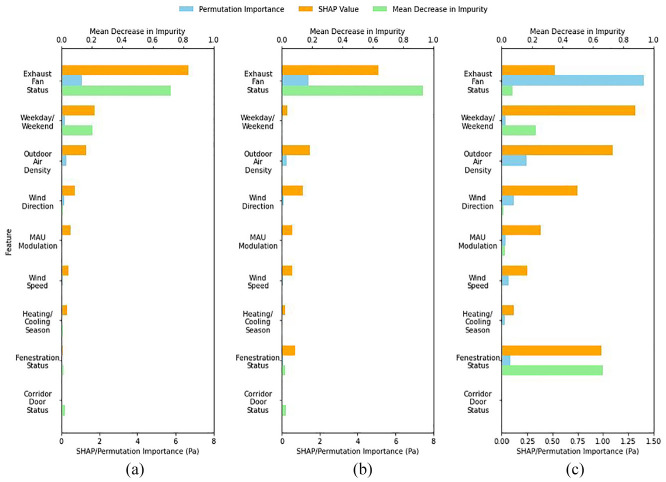
An XGBoost regression model was used to predict corridor-to-suite differential pressure and compare the influence of operating and weather variables. Exhaust-fan operation was the dominant input for two units; outdoor-air density, wind direction and day type also contributed. Feature importance differed by suite, and rare operating states and mismatched data resolution limited model accuracy.
Predicting depressurization risk
A second XGBoost model classified each observation as pressurized or depressurized. It performed well for units with enough depressurization examples but poorly for a unit in which only 0.75% of observations were depressurized. The result shows diagnostic potential where continuous differential-pressure monitoring is impractical, but also why training-data balance and validation in more buildings matter.
Inside the study
Papers
- 2025Data-driven modelling of pressurized corridor ventilation system performance in a multi-unit residential building
- 2025Depressurization risk assessment in multi-unit residential buildings using pressurized corridor ventilation systems
- 2023In-situ performance of a pressurized corridor ventilation system: a long-term study in a high-rise multi-unit residential building