Fault detection & diagnosis at Montréal-Trudeau Airport
Active · 2025–2029
As part of the Electrifying Montréal International Airport living lab, GroundTRUTH is investigating physics-based approaches to fault detection, diagnosis and correction. The work uses existing building-automation data to identify operating conditions that warrant investigation, distinguish equipment problems from acceptable operation and connect diagnoses to practical maintenance or corrective action.
Read the Volt-Age living-lab overview →
Project overview
Working with real operating data
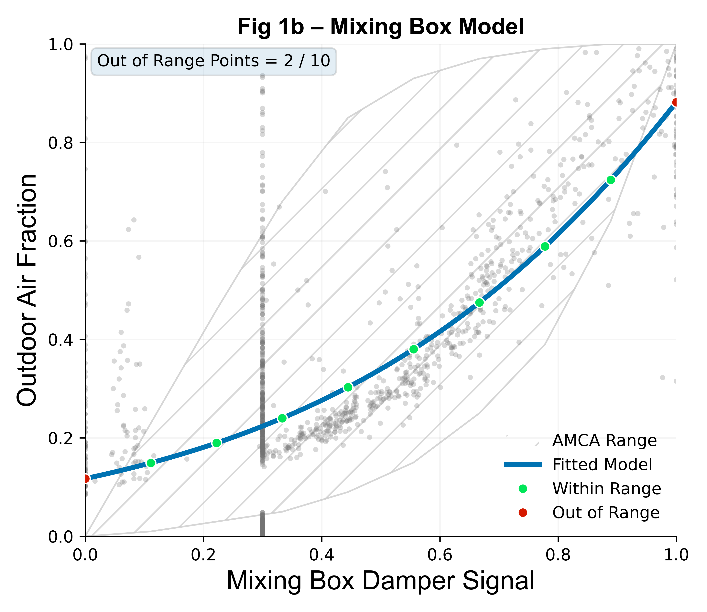
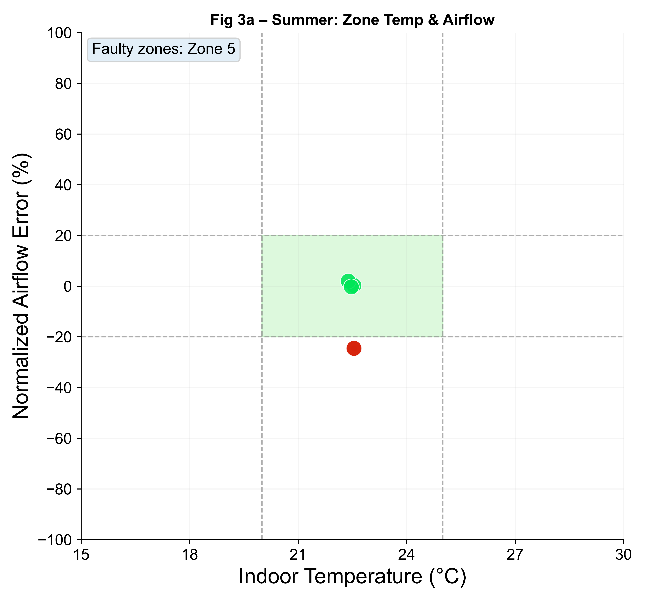
The first case study used five-minute data from one air-handling unit serving four zones over summer 2025. The framework checked how outdoor and return air were mixed, whether dampers and cooling equipment responded as expected, and whether temperatures and airflow followed their control targets.
What the first checks found
Most mixing and cooling checks behaved as expected. The framework also flagged one zone where measured airflow stayed below its target and periods when discharge-air temperature did not follow the reference sequence. Those patterns identify where an operator should look next; they are not treated as confirmed faults until the actual control sequence and equipment are checked.
From detection to action
The value of fault detection is not another stream of alarms; it is a shorter, better-supported list of conditions for operators to investigate. The next phase will verify the flagged conditions, extend the checks across more equipment and seasons, and examine how a diagnosis can lead to an appropriate maintenance or corrective action.
Conference paper
- 2026A Physics Informed Fault Detection and Diagnostics (FDD) Framework for a Non-Conventional VAV AHU of an Airport Building